Waterford learner driver handed €800 in fines after expensive Garda stop
Search


07 Mar 2026

Please allow ads as they help fund our trusted local news content.
Kindly add us to your ad blocker whitelist.
If you want further access to Ireland's best local journalism, consider contributing and/or subscribing to our free daily Newsletter .
Support our mission and join our community now.
To continue reading this article, you can subscribe for as little as €0.50 per week which will also give you access to all of our premium content and archived articles!
Alternatively, you can pay €0.50 per article, capped at €1 per day.
Thank you for supporting Ireland's best local journalism!


The Irish Government needs to “step up” and establish mechanisms to deal with the legacy of the Northern Ireland Troubles “at pace”, a new report from MPs has said.
The cross-party Northern Ireland Affairs Committee has published the report which it said highlights concerns from victims and veterans over new Westminster legislation aimed at addressing legacy issues.
The UK and Irish governments unveiled their new legacy framework in September.
As part of that, the Northern Ireland Troubles Bill is expected to reach committee stage at Westminster in the coming weeks.
The Bill, which will repeal significant portions of the previous government’s Legacy Act, includes plans for a commission to investigate Troubles-related killings and a separate information recovery body.
The framework also included a commitment from the Irish Government for the “fullest possible” co-operation with the new legacy commission and the creation of a dedicated legacy unit within the Irish police force, An Garda Siochana.
The NIAC report said it welcomed the commitment on co-operation over legacy by the two governments.
It added: “Ireland now needs to demonstrate its own commitment to establishing and completing human rights-compliant investigations, underpinned by legislation.
“There is a lack of clarity on the remit, independence and oversight of the proposed legacy unit in the Garda.
“Victim-survivors and other stakeholders will no doubt look for the establishment as soon as possible of structures comparable to those in the UK, to ensure confidence in the legacy process as a whole across the UK and Ireland.”
The report said: “We would urge Dublin to move at pace to show their commitment and mutual good faith, and maximise confidence and the likelihood of successful outcomes.”
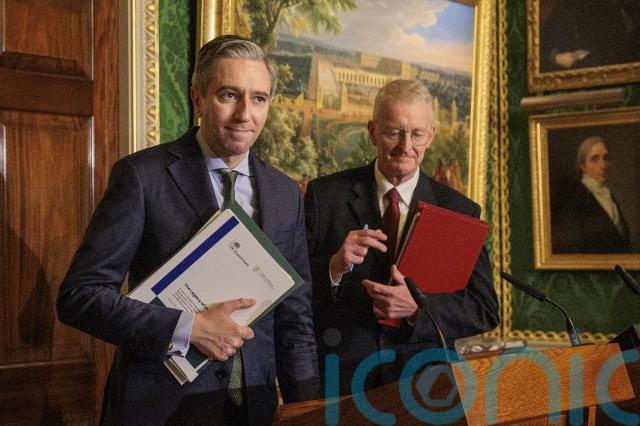
Relating to the proposed new legacy commission, the report said the UK Government must address a range of concerns.
It said these included worries over the lack of any specific requirement for the investigations process to be European Convention on Human Rights-compliant.
The report added: “The commission is due to assume greater responsibilities and those providing it with information such as the PSNI and others will face new demands on their records.
“Without additional support for these organisations, these reforms risk failure.”
The report said there “must be fairness under the law” for veterans and safeguards to “ensure that investigations do not become punitive in nature”.
It added: “The measures referred to by the Government as six new protections may go some way to address concerns raised by former armed forces personnel, but in packaging these as protections – rather than safeguards available to all – the Government risks undermining trust in this process among the very groups in which it hopes to instil confidence.
“Previously defective investigations should be reopened only where necessary for the purposes of ECHR compatibility or owing to new evidence.”
Committee chairwoman Tonia Antoniazzi said the report provided an opportunity for the Government “to address the issues that continue to exercise victim-survivors, veterans and others about their plans”.
She added there is a “golden opportunity” for the new legacy commission to have “the trust and authority it needs to operate across all communities”.
Ms Antoniazzi added: “To do so, however, the Government must listen to concerns about its operation, governance and oversight, and come forward with details on how it intends to safeguard its independence.
“To account for the passage of time, the Government must also expand its definition of ‘close family member’ and ensure the rights and voices of victims and survivors are properly represented.
“To ensure public confidence, more detail is also needed on the Government’s role in balancing information disclosure with national security, and the information-sharing relationship between the legacy commission and the new independent commission on information retrieval.
“The agreement of the Joint Framework with the Republic of Ireland shows a welcome commitment to cross-border co-operation, but the Irish Government now needs to step up when it comes to establishing a legacy architecture of its own.”
A UK Government spokesperson said the recommendations in the report would be carefully considered.
The spokesperson added: “The Troubles Bill will enable victims, families and survivors to seek answers through a reformed and fully independent Legacy Commission.
“For the first time, this will include full information-sharing arrangements with the Irish authorities, for which the Irish Government will legislate as necessary.
“The Troubles Bill will also put in place new protections that are designed specifically for any veteran asked to engage with a legacy process.
“We have a duty of care to those who served in our armed and security forces, and ministers are engaging with the veterans community, as well as with families and victims groups, to ensure the legislation can command the widest possible confidence.”

Subscribe or register today to discover more from DonegalLive.ie
Buy the e-paper of the Donegal Democrat, Donegal People's Press, Donegal Post and Inish Times here for instant access to Donegal's premier news titles.
Keep up with the latest news from Donegal with our daily newsletter featuring the most important stories of the day delivered to your inbox every evening at 5pm.

This publication supports the work of the Press Council of Ireland and Office of the Press Ombudsman, and our staff operate within the Code of Practice of the Press Council. You can obtain a copy of the Code, or contact the Council, at www.presscouncil.ie, Lo-call 1800 208 080 or email: info@presscouncil.ie.