
Spending up 6.7 billion euro as Irish Government in 3.1 billion euro of deficit
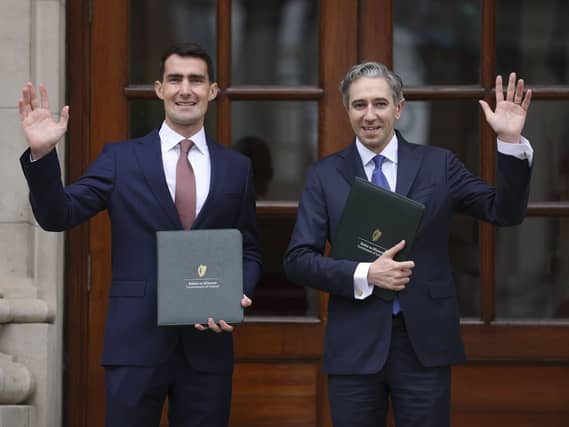

The Fiscal Monitor revealed a 3.1 billion euro Exchequer deficit in the first 10 months of the year, up from 0.9 billion euro this time last year.
Government expenditure in the first 10 months of the year is up by 6.7 billion euro compared to the same time last year, the Fiscal Monitor revealed on Wednesday.
Total expenditure to the end October was 107 billion euro, almost 11 billion euro a month.
Of this, expenditure voted for in the Dáil increased by 7.4% to 93.6 billion euro, and other expenditure like interest on the national debt was 13.4 billion euro, up 200 million on the year previous.
The increase in spending comes despite warnings from the Irish Fiscal Advisory Council (IFAC) in October.
The State’s fiscal watchdog warned that the Government is continuing to use “high-risk” receipts to fund permanent tax and spending measures.
Following the publication of the Budget 2027, the IFAC was critical of the Government’s spending habits, saying it should be saving more of the risky receipts.
The “flash release” document, entitled Fast And Loose, stated Government spending puts the public finances on a “worse trajectory” by “repeatedly breaking established spending limits and increasingly relying on high-risk corporation tax”.
The Fiscal Monitor also reported on Wednesday, an Exchequer deficit of 3.1 billion euro as of the end of October.
This compares to the 0.9 billion euro that the Government spent more than it took in over the same time last year.
The report did note, however, that last year’s figures are an outlier due to the revenues arising from the Court of Justice of the European Union (CJEU) ruling in 2024, that tech company Apple was to pay the Irish state around 13 billion euro in back-tax.
It noted that when these revenues are excluded from 2025, there was an improvement of 1.1 billion euro on the underlying Exchequer balance.
The deficit was offset by a tax revenue increase of 7.9%, up 6.2 billion euro, to 85 billion.
When once-off receipts arising from the CJEU ruling are excluded, total tax receipts were up on last year by 7.9 billion euro (10.3%).
Commenting on the report on Wednesday, the Tánaiste and Minister for Finance, Simon Harris said that the strength of Ireland’s economy and public finances has given the Government the opportunity to spend as it has.
“Today’s Exchequer figures reflect an economy that is continuing to perform well, despite the external challenges and headwinds facing us both domestically and globally,” he said.
“The end-October outturn is also broadly in line with the projections for tax revenue my department published as part of Budget 2027.
“But we cannot take our economic success for granted.
“At a time of considerable global uncertainty, it is more important than ever that we manage our public finances responsibly and prepare for the challenges that may lie ahead.”
Public Expenditure Minister, Jack Chambers added: “The increase in expenditure to end-October reflects the Government’s commitment to strengthening public services, supporting communities and investing in our country’s future.
“This funding supports the delivery of essential public services and progressing key Government priorities across areas such as housing, health, education and infrastructure delivery.”