Search


29 Jan 2026
Search
29 Jan 2026

Please allow ads as they help fund our trusted local news content.
Kindly add us to your ad blocker whitelist.
If you want further access to Ireland's best local journalism, consider contributing and/or subscribing to our free daily Newsletter .
Support our mission and join our community now.
To continue reading this article, you can subscribe for as little as €0.50 per week which will also give you access to all of our premium content and archived articles!
Alternatively, you can pay €0.50 per article, capped at €1 per day.
Thank you for supporting Ireland's best local journalism!

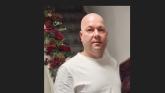
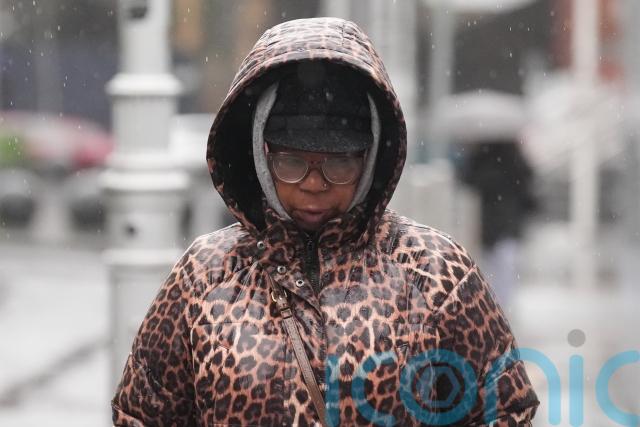
Bullets fired at George Nkencho damaged his heart, lung, liver and spleen, an inquest into his death has heard.
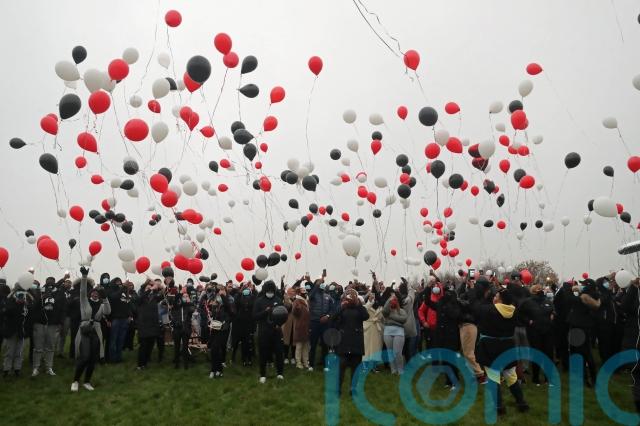
Mr Nkencho, 27, died after being shot by gardai outside his west Dublin home in December 2020.
An inquest into his death has been running at Dublin District Coroner’s Court over the last three weeks.
On Thursday, the jury was presented with evidence of the pathology and post-mortem examination on Mr Nkencho’s body.
The members of the jury had previously heard evidence from his family, witnesses, and gardai who were present at the scene.
The inquest had previously heard from witnesses who said Mr Nkencho punched a retail worker at a shop and brandished a knife.
Gardai have provided evidence that later, outside the Nkencho family home, he waved a knife towards them before he was shot.
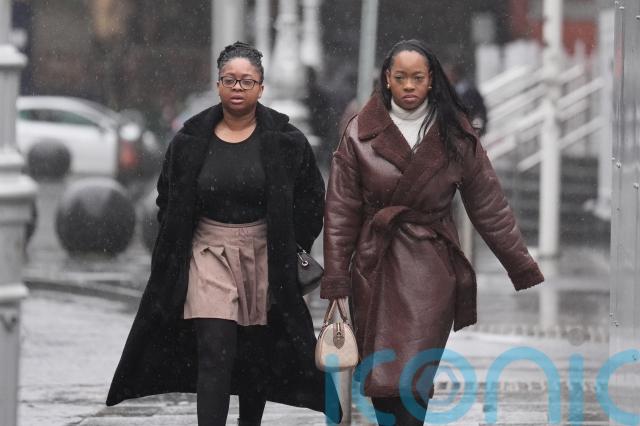
Dr Myra Cullinane, the coroner overseeing the inquest, advised the family that the evidence of the post-mortem examination and pathology would be “distressing”.
A post-mortem examination on Mr Nkencho was carried out by state pathologist Dr Kathleen Han Suyin on December 31 2020 – a day after his death.
Dr Han Suyin told the inquest on Thursday that she had been informed by gardai that Mr Nkencho had apparently approached the Armed Support Unit with a knife and did not respond to verbal commands.
She said she was told that he was tasered but, while immobilised, maintained a grasp of the knife and continued to approach the ASU after he recovered.
She said a second deployment of the Taser and the use of incapacitant spray were both unsuccessful and five to six gunshots were fired.
She said she was told he received first aid immediately and he was transferred to Connolly Hospital where resuscitation attempts – including three doses of adrenaline, two units of blood, and attempts to alleviate build-up of fluid – were unsuccessful and he was pronounced dead.
Before the post-mortem examination, a full CT scan on Mr Nkencho discovered there were two intact bullets present in the body, a build-up of blood in the space between the lung and chest wall, multiple rib fractures, and a tear in the spleen.
The first bullet in the right lower anterior chest area appeared “superficial” while the second bullet was in the “pleural space” between the chest and lung.
The jury was shown an anatomical diagramme made by Dr Han Suyin representing Mr Nkencho’s body and the pathologist guided them through gunshot wounds.
She told the inquest on Thursday that he had been shot six times – identifying one of the wounds as “definitely” fatal as it pierced the heart and lung.
On the bullet track identified as definitely fatal, it appeared to enter on the posterior aspect of Mr Nkencho’s left flank – just slightly above the waist and visible on the diagram showing his back.
This bullet exited upwards and slightly forwards at the centre of his chest – above the level of his nipples.
The track included damage to ribs, as well as the back wall of the left ventricle of the heart as well as a smaller chamber of the organ, and passing through the left lung.
The inquest heard the track was potentially explainable by Mr Nkencho being bent or stooped over or the shot being fired from a lower elevation.
Other bullet entry wounds were present on Mr Nkencho’s chest.
Dr Han Suyin said there was no evidence from her examination that any natural disease present would have contributed to the death, and told the inquest that toxicology found no evidence of alcohol or drugs in his system.
She said she was unable to determine a chronological order for the six gunshot wounds she observed.
Two intact bullets were retrieved from the body and the other four wounds were “through-and-through” injuries – three to the chest and one to the left arm.
She said three gunshot wounds within the chest damaged the liver, spleen, lung and heart and “would have proved rapidly variable”.
The pathologist said the direction of the wounds were “variable” and “in keeping with a moving body”, and the movement of the person firing the shot.
She said none of the wounds could be considered to be close contact and were of intermediate range.
Dr Han Suyin said there was trauma on the back of the left hand consistent with bunt force on a rough surface but there were no other assault or defence injuries present.
She said death was due to multiple gunshot wounds to the trunk.
She said the through-and-through injury on the arm may not have been fatal, and that there could have been a few seconds after injuries to the major organs before someone collapsed.
In particular, she said the wound that damaged the heart and lung would have been fatal but said others were “quite significant” also.
For one of the through-and-through wounds, she said she was unable to determine which direction the bullet had travelled and identify which side was the entry and exit.
The track of this wound appeared superficial and was present only in the soft tissue of the left flank. The wound tracked between the left chest and below the left shoulder blade.
It appeared this bullet did not damage vital organs.
Asked by Ronan Kennedy, the barrister for An Garda Siochana, if there was any evidence of a forcible kick to the mid-back, Dr Han Suyin said there was not.
The jury also heard evidence from Professor Jack Crane, a pathologist instructed by the Nkencho family who was also previously the state pathologist for Northern Ireland.
Prof Crane gave evidence of his examination which was conducted on January 12 2021, after Dr Han Suyin’s.
In relation to the wound for which Dr Han Suyin said she could not determine which side was the entry and exit, he agreed both directions were possible but the jury had initially heard his post-mortem found a “probable entrance wound” on the left side of Mr Nkencho’s back.
He said there was no evidence of close-range gunshot wounds, but said overlying clothing would have obscured determinations of traces of such shots.

Subscribe or register today to discover more from DonegalLive.ie
Buy the e-paper of the Donegal Democrat, Donegal People's Press, Donegal Post and Inish Times here for instant access to Donegal's premier news titles.
Keep up with the latest news from Donegal with our daily newsletter featuring the most important stories of the day delivered to your inbox every evening at 5pm.

This publication supports the work of the Press Council of Ireland and Office of the Press Ombudsman, and our staff operate within the Code of Practice of the Press Council. You can obtain a copy of the Code, or contact the Council, at www.presscouncil.ie, Lo-call 1800 208 080 or email: info@presscouncil.ie.