
Concerns over ‘value for money’ as warm summer damages newly surfaced roads in Waterford


The issue was raised at the September plenary meeting of Waterford City and County Council
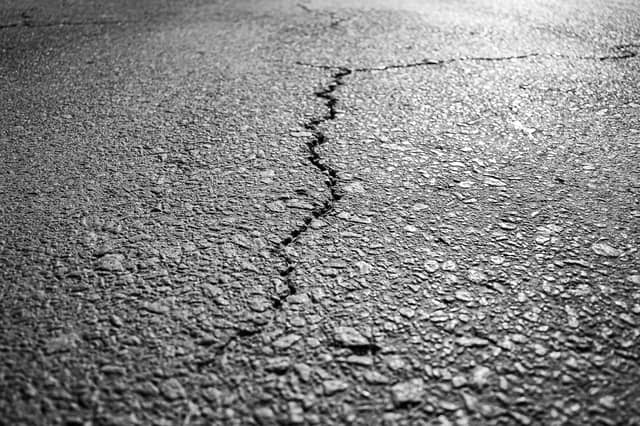
A local councillor has raised concerns over “value for money” after the warm summer damaged a number of newly surfaced roads in County Waterford.
Fine Gael councillor Niamh O’Donovan raised the issue at the September plenary meeting of Waterford City and County Council.
Cllr O’Donovan said: “In regards to road resurfacing, are we getting the best long term value for what we’re using?
“I’d like the council to review whether our current approach to road resurfacing is giving us the best long term value for money, particularly on roads carrying significant agricultural and heavy vehicle traffic.
“At present, we can lay an SMA tarmac surface and then return a relatively short time later to apply surface dressing. In other cases, surface dressing alone is used.”
She outlined how the warm weather, as well as heavy vehicles, can damage rural roads.
“My concern is how well this treatment is standing up to the conditions our rural roads are actually experiencing.
“During very warm weather, freshly applied surface dressing can be particularly vulnerable.
“We have seen situations this summer alone, for example, where tractors and trailers which need these roads when they’re newly surfaced, with the heat, weight and vibration passing.
“They’re moving the material and in some cases, leaving the surface rippled and damaged.”
Cllr O’Donovan questioned whether the council is getting value for money using its current road resurfacing methods.
“If we are spending money resurfacing a road, we have to ask what represents the best use of council resources.
“So my request - could the council examine whether HRA with the high peel speed stones chipping, similar to treatments used on higher standard national roads, would provide a more durable alternative on appropriate heavy traffic local and regional roads.
“I appreciate that HRA has a higher initial cost but I would like us to look at the whole life cost rather than simply the cost on the day the work is carried out.
“If a more expensive surface, lasts considerably longer, withstands heavy agricultural traffic and high temperatures better and reduces the need for repeat surface dressing and repairs, could it ultimately represent better value?”
She also sought clarification on a number of points around the council’s road resurfacing policy.
“I would particularly like clarification on why do we surface dress some roads shortly after laying an SMA tarmac surface and what additional lifespan is that expected to provide?
“What is the expected lifespan and whole life cost of our current SMA plus surface dressing approach compared to HRA and other higher specification alternatives?
“Is the council taking increasing summer temperatures and the impact of heavy tractors, trailers and slurry tankers into account when selecting their surface materials?”
In response to Cllr O’Donovan, Director of Services Gabriel Hynes explained the reasons behind the council’s current resurfacing methods.
Mr Hynes said: “In relation to surface dressing, the reason that we surface dress a road is for skid resistance mainly.
“It’s to ensure that the tires of the vehicle have good friction against the road.
“When we macadam a road, that’s for structural strength and then afterwards, we would put a layer of chippings on top of that.
“We have to strengthen the macadam and the surface dressing will be the skid resistance.
“So when you see surface dressing roads around the county, most of the regional roads, we’re surface dressing those roads because structurally they’re okay, but the chippings will give us the safety and the skid resistance that we need.”
He highlighted the benefits of the council using tarmacadam to resurface roads locally.
“I will assure you that what we’re doing is in accordance with the national specifications and standards set out by TII.
“The other point I want to make is we moved away from granular material that is not macadam material a number of years ago to macadam roads.
“That macadam will give you a lifespan in excess of 30 years. It gives you the structural strength that the road needs so you ensure potholes don’t occur.”
Mr Hynes acknowledged the point made around the impact of higher temperatures and admitted that it can result in the “fattening up of the roads”.
He insisted that the council would have to alter its roads resurfacing policy to adapt to climate change.
However, he rejected the call for HRA to be used on local and regional roads in the county.
“In relation to HRA, it’s what’s used on the national road network. That’s at considerable more cost and it doesn’t give you any real additional strength.
“What we’re doing in relation to our local and regional roads, I think, is the appropriate measure to ensure that we get the structural strength of those roads up to a reasonable state.
“I think as you go around the county, if you look at the local and regional roads that we’ve strengthened, you’ll see that the work we’re doing is of the highest quality and is lasting.”
Mr Hynes concluded by saying that where the council has resurfaced using tarmacadam, potholes are no longer occurring.