
Waterford patients urged to consider alternatives amid ‘significant’ pressure on A&Es
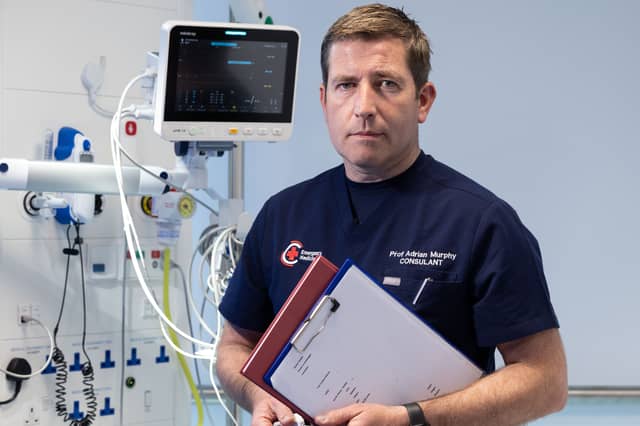

That was the message from an educational event attended by GPs from across Munster
Waterford patients are being urged to consider alternative emergency care options amid “significant” pressure on Accident & Emergency (A&E) departments.
An educational event was recently held at the Mater Private in Cork which brought together GPs from across Munster.
They discussed changing patterns in patient presentations, emergency referrals and opportunities for closer collaboration between primary and secondary care.
Professor Adrian Murphy, Consultant in Emergency Medicine at Mater Private Network Cork and CUH, said helping patients access the right care pathway is increasingly important as demand pressures continue across the healthcare system.
“One of the advantages of the Mater Cork's Emergency Department is that, where appropriate, we can schedule the unscheduled.
“Patients still receive urgent assessment but in a way that can better accommodate work, family and caring responsibilities.”
"The ability to investigate, diagnose and make decisions quickly, supported by specialist expertise, provides reassurance for patients and is one of the most rewarding aspects of emergency medicine.”
Professor Murphy said one of the greatest challenges facing doctors today is determining which patients can be safely managed in the community and which require urgent assessment.
“That decision is rarely black and white. GPs are often making complex risk-based decisions under significant time pressure and with incomplete information. Emergency physicians are then continuing that clinical journey.”
The discussion also focused on the importance of rapid diagnostics and direct communication between GPs and emergency medicine teams.
According to Professor Murphy, rising levels of multimorbidity, frailty and increasingly complex presentations mean that many patients no longer fit traditional diagnostic patterns.
“We are seeing patients who are older, living with multiple conditions and presenting in ways that can be less predictable.
“What appears minor in one person can be much more significant in another.”
Professor Murphy said strengthening relationships between primary and secondary care will be critical as healthcare demand continues to grow.
“We are all working towards the same goal — ensuring patients receive the right care, in the right place, at the right time.
“The more connected those services are, the better the outcome for patients.”