
Former officer claims ‘Garda-MI5 source’ linked to Omagh bomb plot

A legal representative for some bereaved families has reiterated calls for the Irish Government to conduct its own public inquiry.
There was an “absolute failure” of counter-terror policing prior to the Omagh bomb atrocity, a former senior investigating officer has said.
Norman Baxter, former head of the Serious Crime Branch at the PSNI, also said there was a “Garda-MI5 source” involved in carrying out the attack.
A legal representative for some bereaved families has reiterated calls for the Irish Government to conduct its own public inquiry, saying evidence heard thus far raises “very serious allegations about the role of Irish State agencies” into the worst single atrocity in the Troubles in Northern Ireland.
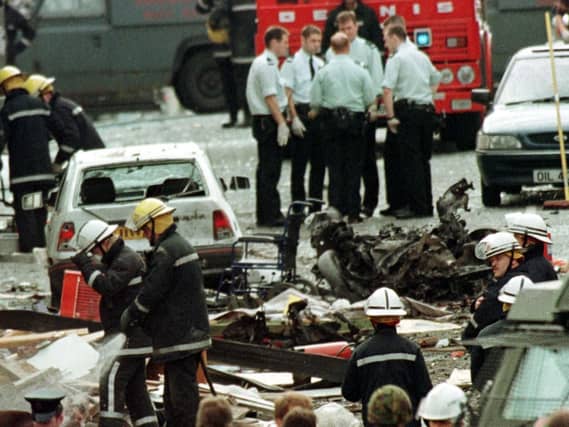
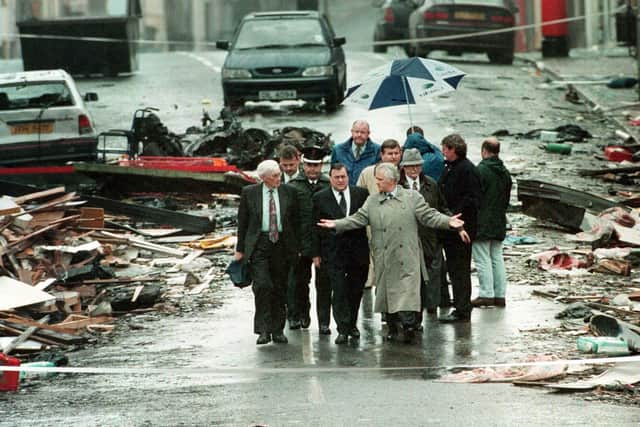
On August 15 1998, a dissident republican car bombing in Omagh killed 29 people, including a woman who was pregnant with twins.
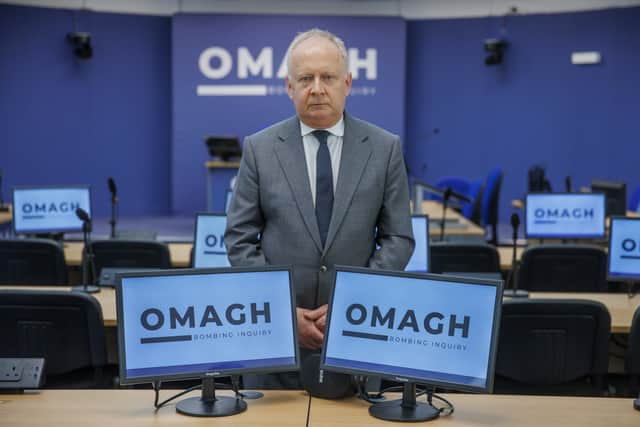
The Omagh Bombing Inquiry, chaired by Lord Turnbull, is holding evidential hearings in Belfast.
Counsel to the inquiry, Paul Greaney KC, read a section of Mr Baxter’s statement to the inquiry where he outlines his “strong indications that the Garda and the Irish Republic had knowledge of dissident Republican activity” which was not shared with the RUC or the PSNI prior to or after August 15.
Mr Baxter had told the inquiry on Thursday that he believed “a human intelligence source” had driven the car across the border from the Republic of Ireland to Northern Ireland.
On Friday, he clarified: “I should have concluded that the assessment is that that source was a Garda-MI5 source, and that’s part of the reasoning in relation to referring to the Irish Republic.”
Mr Greaney said Mr Baxter had been “careful not to name” the source and claimed there is “a good reason why we’re not identifying that person”.
The barrister established Mr Baxter’s position that “intelligence was held about those who carried out the Omagh bombing in relation to earlier attacks that they had carried out”, to which the former officer agreed.
The inquiry was then played a number of contemporaneous news reports about the Omagh bomb in which journalists referred to members of the Provisional IRA moving to or working in collaboration with dissident republican groups.
Mr Greaney posited that “if the media knew all of those things, one would have expected UK state authorities to have known even more”.
He asked Mr Baxter: “If the state knew who was carrying out these attacks, why was that group, why were those individuals not disrupted before the 15 of August 1998?”
Mr Baxter told the inquiry: “This was about risk management.
“All policing is about risk, and the risk was increasing from 97 from the splits within republicanism, and the risks increased over the summer, and then Omagh happened, so in my view, there’s a failure of risk management. There’s a failure of addressing the risk.
“And the inquiry may be looking at why that happened, but from a policing point of view, it was a failure to deal with the emerging and increasing threat.”
He added: “I’m very proud of my time in the police, but this was a failure at leadership, a failure at government level, it just should not have happened.
“These people should have been intervened, and then the weight of two state intelligence organisations, the Republic and the United Kingdom, with all the apparatus they had, all the technology, their source network – these people should have been stopped, and there has to be a reason why that didn’t happen.
“Because I am confident that the Chief Constable did not intend any of this to happen, but it did happen, but there has to be a reason why effective policing was not put in place.”
The former officer agreed that those responsible “should have been stopped” and said intelligence indicates that there were “ample opportunities to arrest individuals”.
“The whole purpose of counter-terrorism policing is ultimately to get a prosecution, but equally to degrade and to disrupt,” he said.
“So, if you can degrade an organisation by making an arrest, causing internal security inquiries, causing mistrust within organisations, seizing their equipment, intercepting their finance, you damage their capability and their tempo to carry out operations.
“It was an absolute failure, and it saddens me to say that, a total failure to do any of that leading up to Omagh.”
The inquiry has previously heard evidence on a number of issues relating to intelligence or information in possession of Irish police or government not being relayed to security services across the border.
In a high court proceeding in Dublin last month, it was heard that on the night before the bombing, a warning call was received by the Irish Army at Finner Camp in Ballyshannon, Co Donegal, which ended with the ominous words, “Omagh, Omagh, Omagh”.
At the inquiry in Belfast, Mr Greaney asked Mr Baxter: “Are you concerned that the government of Ireland had information of relevance in the period before the Omagh bombing, so that is to say, in the week before the Omagh bombing, they had information that indicated that a bombing attack was imminent somewhere in Northern Ireland?”
Mr Baxter replied: “Yes, they were aware that a bomb was imminent.”
Stephen Toal KC, lead counsel for bereaved families and survivors of the Omagh bomb, said Mr Baxter has “carried a huge burden on behalf of the victims for the past 25 years” and thanked the former officer on their behalf.
Mr Baxter responded: “What I would like to say is the legal constraints, and I feel guilty about this.
“I sat for many meetings with various victims’ groups, and I listened to what they were saying about Garda collusion.
“I listened to what they were saying about Garda knowledge, about Irish government cover-ups, about everything in the north, and I knew they were telling the truth, but legally I couldn’t tell them.
“And I have to pay great respect to the effort that has brought the victims to this place where there is a legal forum where the truth can be told without fear of prosecution.”
A legal representative for bereaved families and survivors said evidence that has been heard thus far in the inquiry “raises major questions for State authorities on both sides of the border”.
Enda McGarrity, solicitor for some families, said: “The glaring issue in this inquiry is the role of the Irish government and its agencies.
“Despite the best efforts of the inquiry, the jurisdictional limits of the legislation and the inquiry’s Terms of Reference make it very difficult in practice to investigate whether Irish State agencies could have prevented the bombing.
“The evidence heard so far, not least the damning comments from Norman Baxter concerning the possibility that a positive decision was made to allow the bomb car to travel across the border, makes it abundantly clear that the Irish government must establish its own independent statutory inquiry.
“That inquiry must fully investigate the very serious allegations about the role of Irish State agencies, including An Garda Síochána, before the bombing.”
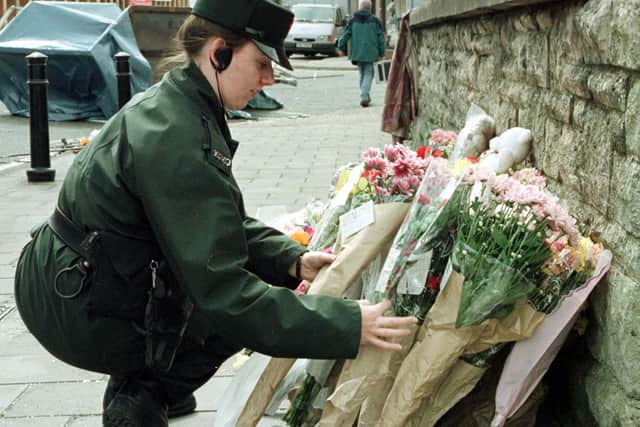
Shawneen Conway, whose brother Gareth Conway was killed in the Omagh bombing at age 18, said her family is “still suffering and living with the effects of what happened”.
She added: “Going through this inquiry almost 30 years later has been extremely difficult, not just for my family but for everyone affected by the bombing.
“We are being retraumatised and having to relive the events and the devastating impact they have had on our lives all over again.
“It is deeply distressing to hear evidence that there may have been warnings and opportunities to prevent or disrupt the bombing. After all these years, we still have so many unanswered questions.
“We need to know what was known, what action was taken and whether everything possible was done to protect innocent lives.
“While the Inquiry has made progress and we are beginning to get a clearer picture of what happened, there is still a long way to go and many important questions remain unanswered. We need to see those questions pursued fully, and we need the Irish Government to properly address its role and responsibilities.”